


Your laptop stops charging the night before a deadline, or your phone screen shatters on the way to work. That is when the local repair shop vs Geek Squad question stops being theoretical. You need a real answer, fast, and the right choice usually comes down to speed, price, communication, and how much hassle you are willing to deal with.
For most people, repair is not just about fixing a device. It is about getting your life back. You want your photos, your school files, your work logins, your texts, and your daily routine. So let’s skip the vague promises and look at what actually separates a neighborhood repair shop from a national retail service desk.
Local repair shop vs Geek Squad: What really changes?
On the surface, both options seem to offer the same thing. You bring in a broken computer, phone, or tablet, explain the problem, and wait for a repair. But the experience can feel very different.
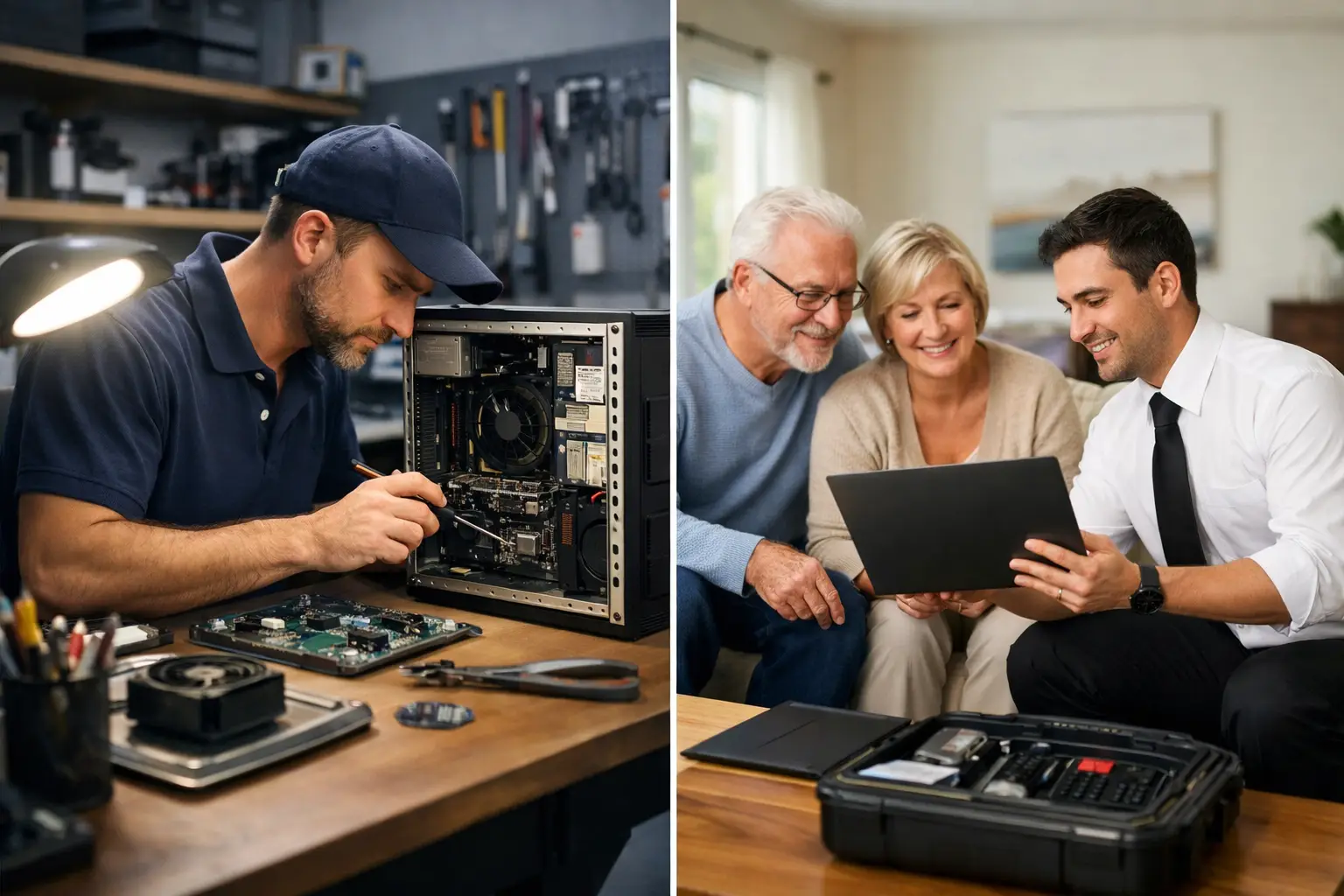
A local repair shop is usually built around service. Repairs are the main event, not something tucked inside a larger retail store. That often means faster diagnosis, more direct answers, and more flexibility when the problem is urgent.
Geek Squad operates inside a large retail system. That setup can work fine for basic issues, especially if you already shop there or have a service plan. But big systems also tend to mean more process, more handoffs, and less room for quick exceptions when you are in a bind.
If you are choosing between the two, the better question is not which brand is bigger. It is which option makes it easier to solve your problem without wasting time or overpaying.
Speed matters more than most people think
When a device breaks, every extra day matters. A student may need a laptop for class. A parent may need a phone for school alerts and work calls. A small business owner may need access to files immediately.
This is where local shops often pull ahead. Because repair is their core business, they can usually diagnose problems faster and turn around common repairs more quickly. Screen replacements, battery swaps, charging port issues, virus cleanup, and many software problems are often handled on a same-day or next-day timeline depending on parts and device condition.
With a national chain, the timeline can be less predictable. Some jobs are handled in store, but others may be sent out or moved through a broader service process. That does not always mean bad service. It just means speed may depend on staffing, appointments, parts availability, and internal workflow.
If your repair is urgent, ask one simple question before committing: when will I realistically get my device back? Not the best-case estimate. The realistic one.
Price is not just the sticker price
A lot of customers assume a big national name will offer better pricing. That is not always how it plays out.
Local repair shops are often more competitive because they do not carry the same overhead structure as large chains, and they rely heavily on reputation and repeat business. That tends to push pricing toward straightforward quotes and practical repair options.
Geek Squad pricing may make sense in certain cases, especially if a customer has an existing protection plan. But if you are paying out of pocket, the final cost can feel high compared with what an independent shop may charge for the same type of issue.
There is also the question of value. A cheaper quote is not better if it leads to delays, vague communication, or a repair that does not hold up. On the other hand, a slightly higher quote from a trusted local shop can still be the better deal if it includes faster service, better parts, and a clearer explanation of what is being fixed.
That is why the smartest shoppers compare more than one number. They compare total hassle.
Communication is where big differences show up
People do not just want their device fixed. They want to know what is happening.
This is one of the biggest advantages of a strong local repair shop. You are more likely to talk to a real person who understands the repair process, can explain the issue in plain English, and can answer follow-up questions without bouncing you between departments.
That kind of communication matters when the problem is not obvious. Maybe your laptop is randomly shutting off. Maybe your iPhone charges only when the cable is held at a weird angle. Maybe your tablet has water damage and you need to know whether repair is worth it. Those are not one-size-fits-all problems.
Large retail service setups can feel more scripted. Some customers like that structure. Others find it frustrating, especially when they want a direct update or an honest opinion on whether a device is worth saving.
A local shop often wins on clarity because there is less distance between the person diagnosing the issue and the person speaking to the customer.
Device coverage and repair flexibility
Another practical difference is what each option is willing to handle.
Geek Squad is generally geared toward a defined menu of services and supported products. That can be fine for common consumer issues, but it may be less helpful when the repair falls outside standard lanes.
Local repair shops often have more flexibility. They may work on older laptops, custom PCs, charging ports, power jack problems, liquid damage, data recovery cases, and a wider mix of Apple and Android devices. If your device is no longer new, no longer under manufacturer coverage, or dealing with more than one issue at once, flexibility matters.
That does not mean every local shop can fix everything. Some are excellent, some are average, and some should be avoided. But a good local shop is usually more willing to inspect the actual problem instead of forcing it into a narrow service category.
Local repair shop vs Geek Squad for common repairs
For cracked phone screens and battery replacements, local shops are often the more convenient choice. These are high-volume repairs, and experienced local techs can usually quote them quickly and complete them fast.
For virus removal and slow computer problems, local service also tends to be a strong fit because the work often requires hands-on troubleshooting and clear communication. You want someone who will tell you whether you have malware, a failing drive, startup clutter, or a device that is simply too old to perform well.
For data recovery, the answer depends on the severity of the problem. If the device still powers on or the issue is limited to software or a failing drive, a skilled local repair team may be a great option. If the storage is physically damaged at a specialized level, the job may need a dedicated recovery lab. A trustworthy shop will tell you when that is the case.
For warranty-related situations, Geek Squad may have an advantage if your device or protection plan is tied to that system. That is one of the few cases where staying inside the retailer’s process can be easier.
Convenience is not just location
A lot of people assume convenience means going to the nearest big-box store. But real convenience is about how many steps it takes to get help.
Can you call and reach a live person? Can you get a quote without jumping through hoops? Can someone explain whether the repair is worth doing? Can you get a quick turnaround instead of waiting a week to hear what went wrong?
That is why many customers in places like Havertown, Aston, Springfield, and Media end up preferring a local repair company. The repair feels more personal, but it also feels more efficient. You are not trying to fit your problem into a giant system. You are getting help from people whose business depends on solving your problem well.
Some local shops also offer pickup and drop-off service, which can be a major advantage if you are juggling work, school, or family schedules. For a broken laptop or desktop, that can save a lot of stress.
So which one should you choose?
If you have a retailer-backed warranty or service plan, Geek Squad may be worth checking first. If your issue is simple, your expectations are flexible, and the process fits your coverage, it can be a reasonable route.
But if you want faster turnaround, a more personal experience, clearer communication, and pricing that often makes more sense, a local repair shop usually comes out ahead. That is especially true when the device problem is urgent, the repair is not perfectly standard, or you simply do not want to feel like a ticket number.
The best local shops earn trust by being easy to reach, honest about costs, and willing to tell you the truth about your device. That is why so many people choose independent repair over big-box service once they have tried both. Companies like CNA Computer Repair & Sales have built their reputation on that difference.
When your device fails, you do not need more process. You need a fix, a timeline, and someone who will actually talk to you like your problem matters.
Leave a Reply