

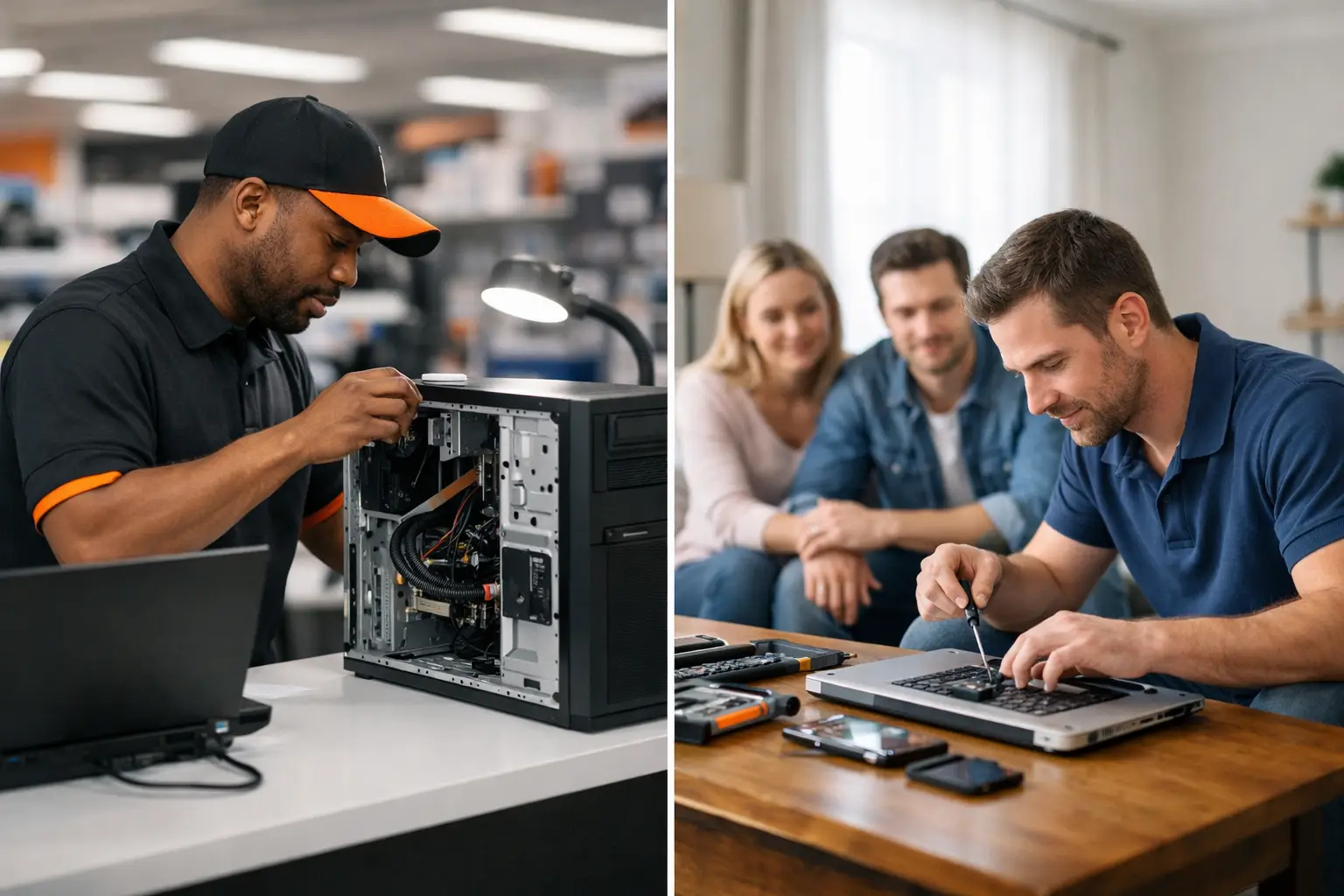

Your laptop won’t turn on, your phone screen is shattered, or your computer is crawling because of a virus. That’s usually when the geek squad vs local repair question stops being theoretical and gets very real. You do not want a long process, vague pricing, or a week without your device. You want it fixed fast, fixed right, and explained by someone who actually picks up the phone.
Geek Squad vs local repair: the real difference
On the surface, both options promise the same thing: device repair. But the experience can be very different once you get past the branding.
Geek Squad is part of a large national retail operation. That can feel familiar if you already shop in big-box stores and like the idea of a recognizable name. Local repair shops are usually smaller, more direct, and more flexible. Instead of working through a national system, you are often dealing with the people who actually inspect and repair your device.
That difference matters when your problem is urgent. If your phone battery is dying by noon, your child’s iPad has a cracked screen, or your laptop has important files you need for work tomorrow, speed and communication matter just as much as the repair itself.
Price is usually where people start
For most customers, cost is the first question. And fair enough. Nobody wants to pay more than necessary, especially when replacing the device is already in the back of your mind.
National chains often come with more overhead, more process, and less flexibility. In some cases, that can mean higher pricing or more rigid service packages. A local repair shop is often better positioned to give you a straightforward estimate, explain what actually needs to be replaced, and avoid pushing you into a costly option when a simpler fix will do the job.
That does not mean local is always cheaper in every situation. Some repairs depend on the device model, part availability, and the type of damage. But in many everyday cases like screen repair, battery replacement, charging port issues, virus removal, and software troubleshooting, local repair tends to be more budget-friendly.
Just as important, local shops are often clearer about what you are paying for. Hidden fees, vague diagnostic charges, and unclear timelines are where frustration starts.
Speed can make the decision for you
If you can wait a week, you have more options. Most people cannot.
A broken phone is not a minor inconvenience anymore. It is your calendar, camera, bank app, email, GPS, and daily communication. The same goes for a laptop that you need for school, work, or running a small business.
Big-box repair services often operate within a larger queue. Devices may be checked in, transferred, approved, ordered, and processed through multiple steps before the actual repair begins. That structure works for some people, but it is not ideal when time matters.
Local repair shops usually win on turnaround. Because they focus on repair as the core service, not an add-on inside a retail store, they can often move faster. Same-day service for common issues is more realistic, and you are more likely to get a real answer about timing instead of a broad estimate.
That speed matters in practical ways. If your screen is cracked on Monday morning, you want to know whether you can have your phone back by lunch, not whether someone will update you in three business days.
Communication is where local repair often stands out
A lot of customers are not looking for technical jargon. They want plain English.
One of the biggest differences in the geek squad vs local repair debate is how easy it is to actually talk to someone. With a local shop, you are often speaking directly to staff who understand the repair process and can tell you what is going on. You can ask whether your data is safe, whether the battery is worth replacing, or whether water damage has reached the board.
That kind of conversation builds trust fast. It also helps you make a better decision. Sometimes a repair is clearly worth it. Sometimes it is not. A good local technician will tell you the difference instead of keeping you in a generic process.
For less technical customers, this is huge. If you are already stressed because your device failed, the last thing you need is a confusing chain of handoffs.
Convenience is not just about location
Some people assume a national chain is automatically more convenient because they have recognizable stores. But convenience is really about how much effort the repair takes from your side.
Can you get a live person on the phone? Can you get a fast quote? Can the shop handle your exact device without sending it somewhere else? Do they offer pickup and drop-off? Are they open when real people are off work?
Those questions matter more than the logo on the building.
A local repair company that answers the phone, gives realistic turnaround times, and makes the process simple is often more convenient than a bigger brand with more locations but more friction. For busy families, students, and working professionals around Havertown, Aston, Media, and nearby communities, saving time is part of saving money.
What about quality and parts?
This is where people get cautious, and they should. Price means nothing if the repair does not hold up.
A good local repair shop should be clear about the quality of parts being used, what kind of warranty is offered, and what you can expect after the repair. If a screen replacement looks poor, a battery drains too quickly, or a charging port feels loose, that is not a bargain. That is a repeat problem.
The advantage of a strong local repair provider is accountability. You are not dealing with a distant system. You can go back, ask questions, and get support from the same business that handled the repair. That local reputation matters.
At the same time, customers should understand that not all repairs are equal. A heavily water-damaged phone, a board-level laptop issue, or a device with previous failed repairs may come with more uncertainty than a basic battery swap. Honest shops will tell you that upfront.
When Geek Squad might make sense
There are cases where a national chain may be the right fit.
If you already have a service plan tied to a retailer, prefer to keep everything within that system, or have a very specific warranty situation, Geek Squad may be the path you choose. Some customers simply feel more comfortable with a brand they already know.
That said, familiarity is not always the same as better service. If the process is slower, the pricing is higher, or communication is harder, the name alone does not solve the problem.
When local repair is usually the better move
Local repair tends to make the most sense when your priority is speed, value, and direct service. That covers a lot of real-world situations.
If your iPhone screen is cracked, your Android will not charge, your MacBook needs a battery, your Windows laptop has a virus, or your tablet took a spill, a local shop can often diagnose the issue quickly and give you a practical path forward. You are less likely to get lost in a process and more likely to get a real answer.
This is especially true if your device holds important photos, work files, or school documents. Fast access to a technician who can explain repair options and data recovery possibilities is a major advantage.
The better question to ask
Instead of asking which option is bigger, ask which option is better for your situation right now.
Do you need same-day service? Do you want to speak with a live person? Do you want a fair quote without jumping through hoops? Do you want repair to feel simple instead of bureaucratic?
If the answer is yes, local repair has a strong edge. That is why many customers who try both end up preferring the more personal route. Companies like CNA Computer Repair & Sales have built their reputation on exactly that – faster turnaround, clearer communication, and affordable help without the big-store runaround.
A broken device is already disruptive enough. The repair process should lower your stress, not add to it. Choose the option that treats your time, your budget, and your data like they matter.
Leave a Reply