

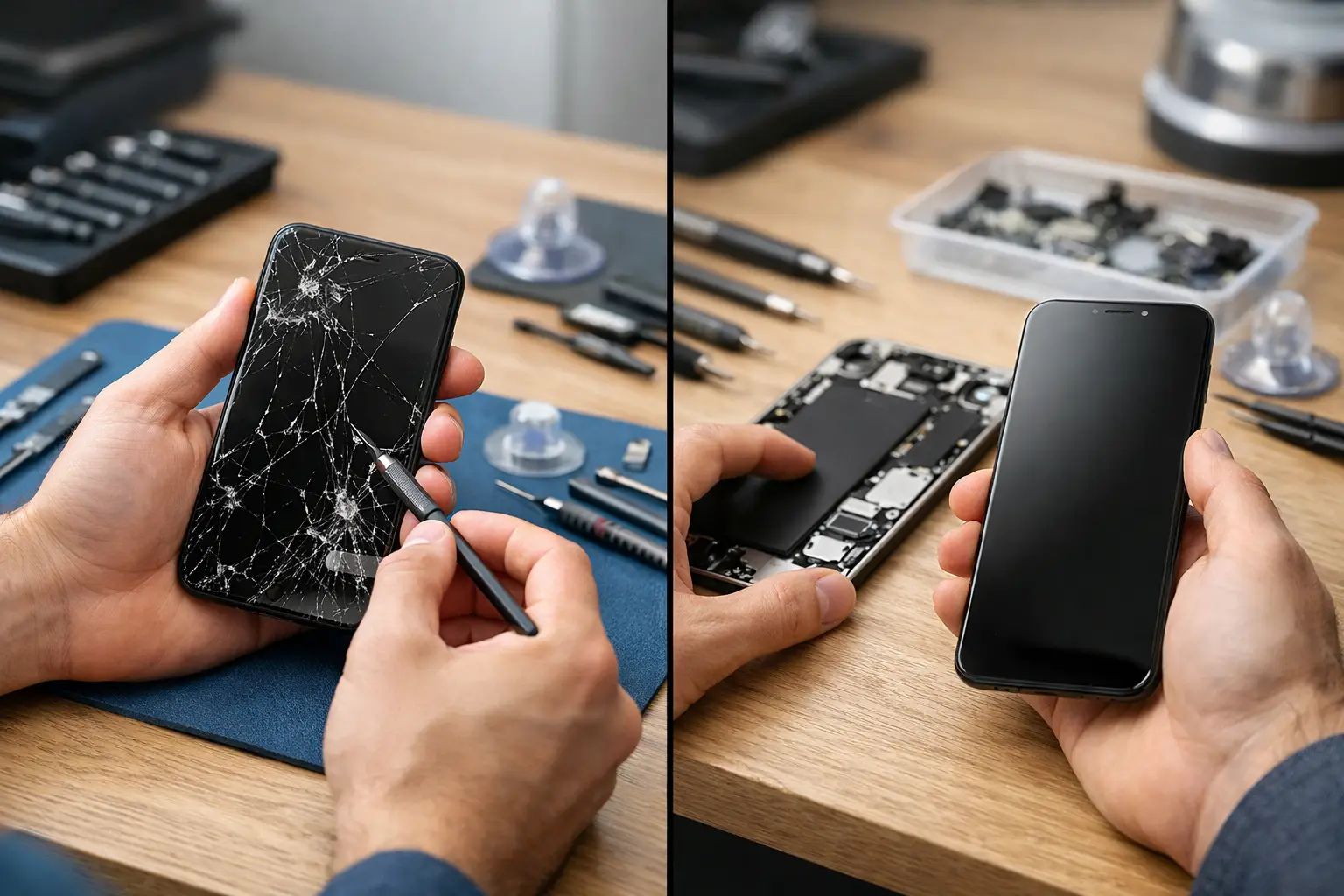

That moment when your iPhone hits the floor is bad enough. What makes it more frustrating is not knowing whether you need a simple fix or a full screen swap. When people ask about iPhone screen repair vs replacement, what they usually want to know is simple: can this be fixed for less, or am I already past that point?
The honest answer is that it depends on the type of damage, the model of iPhone, and how the screen is behaving right now. A small crack with normal touch response is a very different problem from a display that is flickering, showing black spots, or no longer responding to touch. If you understand the difference, you can save time, avoid unnecessary costs, and get your phone back in working shape faster.
iPhone screen repair vs replacement: what is the difference?
People often use both terms like they mean the same thing, but they do not always describe the same service. Screen repair can sometimes mean fixing only part of the screen assembly, usually when the issue is limited and the underlying display is still working correctly. In everyday conversation, though, many repair shops use the word repair to describe the whole job, even when they are installing a new screen.
Screen replacement is more specific. It usually means removing the damaged display assembly and installing a new one. On most modern iPhones, the front glass, digitizer, and display are closely integrated. That means once damage goes beyond a very minor surface issue, replacement is often the practical and reliable option.
This is why the cheapest sounding option is not always the real option. A phone may look like it only has a cracked glass layer, but if the touch layer or OLED or LCD panel underneath has been affected, a full replacement is usually the correct fix.
When repair might be enough
There are cases where a less extensive fix makes sense, but they are narrower than most people expect. If the display is still bright and clear, touch works normally across the entire screen, Face ID related components are unaffected, and the damage is limited to the outer layer, a limited repair may be possible depending on the phone model and the shop’s process.
That said, glass-only work is not the standard answer for many iPhones. It requires the right equipment, careful separation, and a screen that is otherwise in excellent condition. If the display already has internal damage, dead pixels, lines, discoloration, or touch issues, trying to save the original screen can turn into more trouble than it is worth.
A lot of customers hear the word repair and assume it always means lower cost. Sometimes that is true. Sometimes the labor and risk involved in trying to preserve a damaged screen make replacement the smarter value.
When replacement is the better move
If your iPhone screen has black blotches, green or white lines, flickering, ghost touch, dead areas, or a completely blank display, replacement is usually the right move. The same goes for screens with deep impact damage, bent frames, or moisture exposure that has reached the display.
Replacement is also often the better choice when reliability matters more than squeezing out the lowest possible price. If you use your phone for work, school, banking, directions, or staying in touch with family, you do not want a temporary fix that leaves you wondering whether the screen will fail again next week.
A full replacement gives you a fresh display assembly and a more predictable result. It also allows the technician to inspect the phone for related issues, like frame damage, battery swelling, or loose internal connections that can affect how the new screen performs.
The hidden factor: frame damage
One of the biggest reasons screen jobs get more complicated is damage around the edges of the phone. If the frame is bent or dented, even a brand-new screen may not sit properly. That can create pressure points, gaps, weak sealing, or repeat cracking.
This is where a quick quote over the phone can only go so far. Two phones with the same model and what looks like the same crack can need very different work once a technician checks the frame in person. A repair shop that explains this upfront is usually saving you from a comeback repair later.
If the frame is only slightly out of shape, it may be possible to correct it enough for a proper fit. If it is badly bent, the repair becomes more involved. Either way, this is one of those details that matters more than most customers realize.
How cost really works
Everyone wants the affordable option, and that makes sense. But with iPhone screen repair vs replacement, price should be tied to value, not just the lowest number on a quote.
A basic crack on an older iPhone will usually cost less to replace than damage on a newer model with a more expensive display. OLED screens generally cost more than LCD screens. Newer devices can also require extra care to preserve features and maintain proper performance after the repair.
The other part of the cost equation is quality. Very cheap parts can be tempting, but they may come with weaker brightness, poor color, reduced touch response, or shorter lifespan. A good repair should restore usability without making the phone feel worse than it did before it broke.
That is why straightforward pricing matters. You want to know what part quality is being used, whether labor is included, and whether the quote reflects the actual condition of the phone. Hidden fees and vague wording are usually a sign to slow down and ask more questions.
Don’t ignore symptoms after the crack
Some screens still light up after a drop, so people keep using them and hope for the best. Sometimes that works for a while. Sometimes the damage spreads fast.
A cracked screen can let in dust and moisture. It can also get worse from normal pressure in your pocket, bag, or car mount. If touch starts lagging, typing becomes inaccurate, or the display begins to flicker, the problem is already moving beyond cosmetic damage.
There is also the safety issue. Broken glass can splinter further over time, and exposed edges make the phone more uncomfortable to use. If the screen is lifting away from the frame, stop using it until it is checked. That can point to impact damage, a swollen battery, or a poorly seated display.
What a good repair shop should tell you
A trustworthy shop should not push replacement automatically, and it should not promise a smaller repair if the phone clearly needs more work. It should explain what is damaged, what options are realistic, and what result you can expect.
That means being clear about whether your issue is cosmetic, display-related, touch-related, or structural. It also means giving you a realistic timeline. If your phone is your everyday lifeline, speed matters. Same-day service is often possible for common iPhone screen jobs, which can make a big difference when you cannot afford to be without your device.
Good service also sounds like plain English. You should not need a technical background to understand what is wrong with your phone. A local repair team that answers the phone, gives a direct explanation, and stands behind the work is often a much better experience than getting bounced around by a national chain.
For customers in areas like Aston, Havertown, Media, and surrounding communities, that local option can also mean less downtime and less hassle. CNA Computer Repair & Sales has built its reputation around exactly that kind of fast, straightforward help.
So which one do you need?
If the screen damage is light and the display underneath is fully functional, a limited repair may be possible. If the iPhone has display issues, touch problems, frame damage, or deeper impact signs, replacement is usually the better path.
The biggest mistake is guessing based on appearance alone. A spiderweb crack does not always mean the screen is beyond saving, and a small crack does not always mean the damage is minor. The only reliable answer comes from checking how the screen looks, feels, and responds in real use.
If your iPhone is cracked, flickering, or starting to act strangely, do not wait for the problem to get worse. The sooner you have it looked at, the more options you usually have, and the easier it is to get back to normal without paying for bigger problems later.
Leave a Reply