

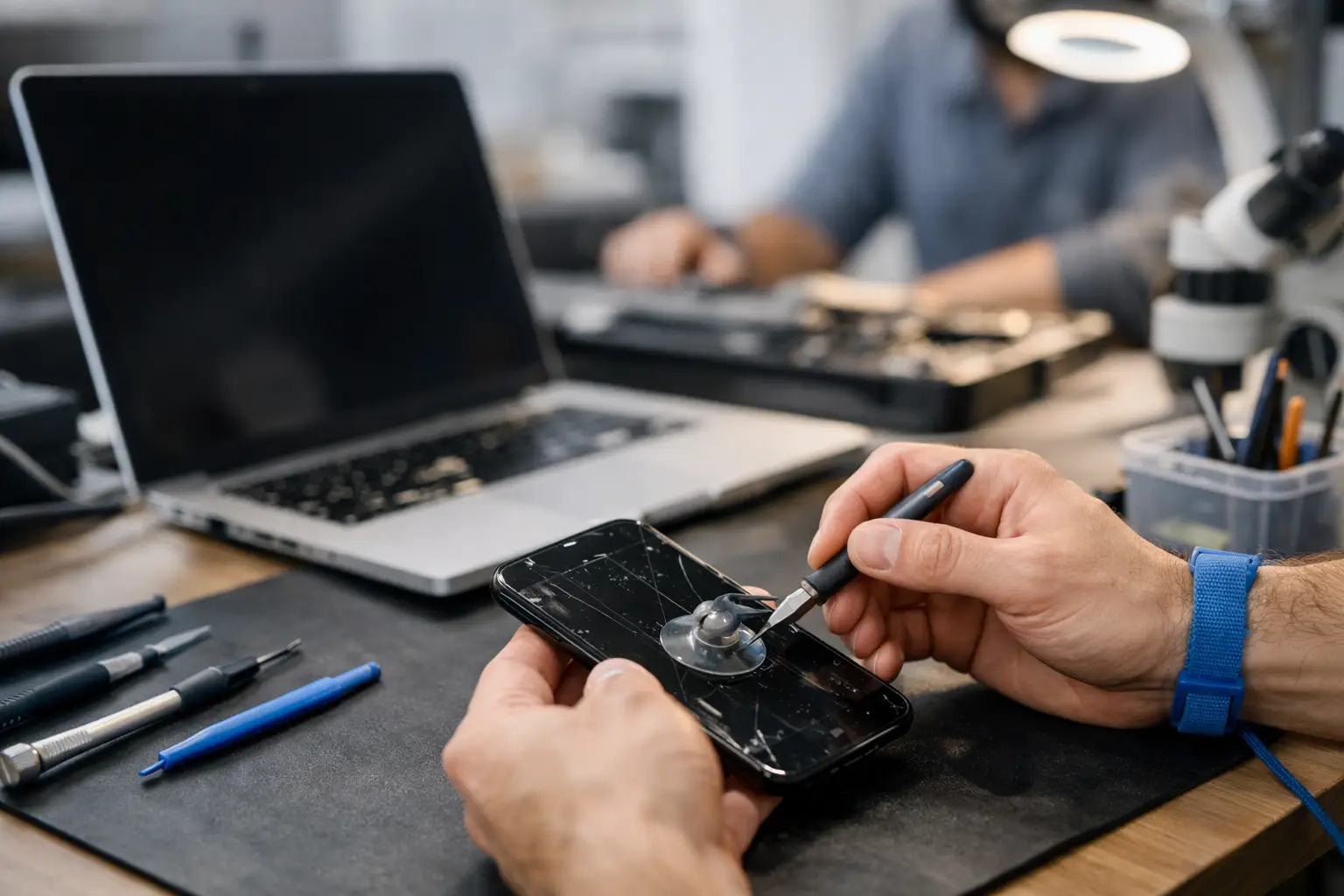

A cracked phone screen rarely happens at a convenient time. It happens before work, during a busy school week, or when you need to answer a customer call. Screen repair turnaround time is often the first question people ask because a damaged device can quickly turn into a daily disruption. The good news is that many common screen repairs can be completed the same day when the right parts are available and the damage is limited to the display.
The exact timing depends on more than the crack you can see. Your device model, the condition of the frame, whether the touch screen still works, and the availability of a quality replacement part all matter. A reliable repair shop should give you a clear expectation upfront, not leave you wondering when you will get your phone, tablet, or laptop back.
What Is the Typical Screen Repair Turnaround Time?
For many popular iPhones, Android phones, iPads, tablets, and laptops, a screen repair can often be handled within a few hours or by the end of the day. If you bring in a device early, same-day service may be possible. This is especially true when the repair is a straightforward screen replacement and the needed part is already in stock.
Some repairs take longer, and that is not always a bad sign. A less common phone model may require a part to be ordered. A laptop with a specialty display panel can take additional time to source correctly. If a device has more than screen damage, the technician may need to test for battery, charging, camera, frame, or internal board issues before returning it.
The fastest repair is not simply the one completed first. It is the one completed correctly, with a compatible part and proper testing before you leave.
Why Some Screen Repairs Are Same Day
Same-day screen repair is most realistic when three things line up: the device is a common model, the replacement screen is available, and the damage has not spread beyond the display assembly. A recent iPhone or popular Samsung Galaxy, for example, is usually easier to service quickly than an older, uncommon, or heavily damaged device.
Repair shops that focus on local service can also move faster because you are dealing directly with the people doing the work. There is no need to ship your device to a central facility, wait for a corporate authorization process, or chase down a status update through a call center.
At CNA Computer Repair & Sales, the goal is to keep common repairs moving with quick, affordable service and a clear answer from a live person. If same-day repair is available for your device, you should know before you commit to the service.
The part has to be available
Parts availability is usually the biggest factor in turnaround time. A shop may be able to repair a screen quickly, but only if it has the correct display in stock. This matters because phone screens are not interchangeable just because two models look similar.
A quality repair also requires the right component for your exact model, including the correct size, connector, display type, and touch functionality. Using an incorrect or low-quality screen can lead to poor brightness, unreliable touch response, color problems, or a screen that fails sooner than it should.
The damage needs to be isolated
A crack on the front glass does not always mean the screen is the only issue. If your device was dropped hard, the frame may be bent, the battery may have shifted, or the charging port and cameras may need inspection. If the screen has black spots, flashing lines, dead areas, or no touch response, the display itself is likely damaged too.
Water exposure changes the timeline as well. A phone that was dropped in water and has a cracked screen needs careful evaluation before a new display is installed. Replacing the screen without addressing moisture or corrosion can create a temporary fix rather than a dependable repair.
What Can Make a Screen Repair Take Longer?
A professional shop should be honest about delays instead of promising a repair time it cannot meet. The most common reasons for a longer repair are straightforward: parts need to be ordered, the device has hidden damage, or the repair requires extra testing after installation.
Curved displays, foldable phones, OLED panels, and newer models with fingerprint sensors or face recognition hardware can require more precision. Tablets and laptops may also take longer because the screen can be attached with adhesive, integrated into the lid, or paired with other components that need to be moved carefully.
An unusually bent frame is another issue. A new screen placed into a warped housing may not sit properly and can crack again under pressure. In that situation, taking time to correct the frame or explain your options is better than rushing a screen replacement that will not last.
How to Get Your Device Repaired Faster
Calling before you visit can save time. Provide the exact make and model of your device, describe what happened, and explain whether the screen still displays an image and responds to touch. A good repair shop can often confirm part availability and give you a more realistic timeframe before you make the trip.
It also helps to back up your device if it is still usable. Screen repair usually does not require data removal, but a backup is smart whenever a device has been dropped, exposed to water, or is behaving unpredictably. If the display is too damaged to use, let the technician know whether there are important photos, messages, school files, or business information you need protected.
Before handing over the device, remove any case or accessories if possible and bring your passcode if the technician may need it for final testing. That allows them to check touch response, cameras, speakers, charging, display brightness, and other functions without waiting for you to return.
Fast Repair Should Still Include Testing
It is reasonable to want your phone back quickly. But a screen repair should not end the moment the new panel turns on. The device should be tested for display quality, touch accuracy, proximity sensors, cameras, charging, buttons, and wireless connections when relevant.
For iPhones and certain Android devices, a technician may also need to address warnings or calibration-related functions tied to the original screen assembly. The repair process varies by model, which is another reason an exact model number matters when requesting a quote and timeframe.
Ask what type of replacement part will be used and whether the repair includes a warranty. Price matters, especially when you are comparing repair against replacement, but the cheapest option is not always the best value. A screen that looks dim, responds poorly, or fails early can cost more in frustration and another repair visit.
When Repair May Not Be the Best Option
Screen repair is usually worthwhile when the device is otherwise working well and has enough life left to justify the cost. It may be less practical if the phone has major internal damage, repeated water exposure, a failing battery, or an outdated operating system that no longer supports the apps you need.
A clear assessment helps here. Rather than pushing a repair that does not make financial sense, a trustworthy local technician should explain the condition of the device, the expected repair cost, and whether another option may serve you better. If a battery or charging issue is discovered during a screen inspection, you can decide whether to handle both repairs at once or focus on the most urgent problem.
Get a Clear Timeframe Before You Wait
You should not have to guess whether a simple cracked screen will keep you disconnected for days. Ask for an estimated screen repair turnaround time based on your exact device and its condition, then ask whether the part is in stock and what testing will be completed before pickup.
A quick call can turn a stressful cracked screen into a plan. Get the facts, choose a repair you can trust, and get back to using the device your day depends on.
Leave a Reply